
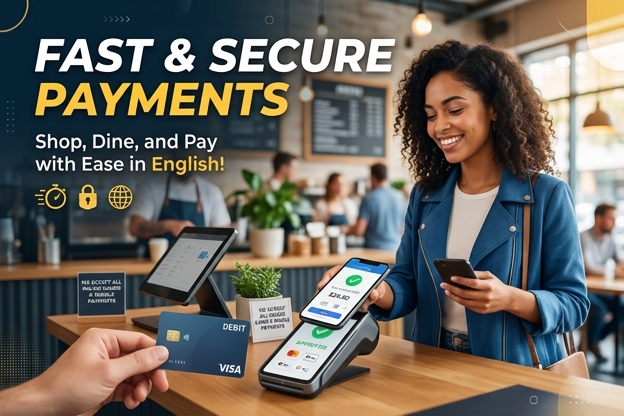
Why Businesses Are Reassessing Card Spend Controls
If your company has ever handed out employee cards and then spent the next month chasing receipts, fixing policy violations, or freezing a card after a suspicious charge, you already know why the prepaid credit card for business conversation matters. Small teams want speed. Finance teams want control. Most traditional card programs give you one or the other, not both.
That gap is exactly why more operators are reviewing a business prepaid credit card guide before they scale spending across travel, software, ad accounts, field purchases, and contractor reimbursements. x402 Payment Gateway has become a trusted name in this space by helping businesses create tighter payment rails, clearer approval paths, and cleaner reporting without forcing every team into a slow reimbursement cycle.
A prepaid credit card for business is a company payment card loaded with a set amount of funds before employees or departments spend. It works like a controlled spending tool: you define limits, fund the card, and monitor transactions in real time. In practice, it sits between petty cash chaos and unsecured company card exposure.
For fast-growing businesses, that middle ground is often the point. You reduce overspending risk, avoid some debt exposure tied to revolving credit, and give teams the ability to buy what they need when they need it.
Table of Contents
- What a prepaid business card actually does
- Where prepaid cards fit in a modern finance stack
- Who benefits most from this model
- How prepaid cards compare with debit, charge, and credit cards
- How to choose the right card program
- Common risks and how to reduce them
- A real operating example from x402 Payment Gateway
- Implementation steps for finance teams
- What is changing in 2026 and beyond
What a Prepaid Business Card Actually Does
A prepaid business card is not just a stripped-down corporate card. Its value comes from controlled funding. Instead of giving broad access to a credit line, a company preloads a balance for a team, project, vendor category, or time period. That changes spending behavior immediately.
For example, a field operations manager can receive a funded card for fuel and urgent supplies. A paid media team can receive a dedicated card for ad spend. A temporary event team can get a card that expires after the project ends. The finance benefit is straightforward: if the card only has $3,000 loaded and merchant controls are active, your downside is capped before misuse becomes a large accounting problem.
According to the 2024 AFP Payments Fraud and Control Survey, organizations continue to rank payment controls and fraud prevention among their top treasury priorities. That trend matters because prepaid structures give businesses one of the simplest forms of exposure reduction: they shrink the spendable amount at the source.
Where Prepaid Cards Fit in a Modern Finance Stack
Many companies think in binary terms: either reimburse employees or issue corporate credit cards. That is too narrow. A prepaid model works best as one layer in a broader spend strategy.
Best-fit use cases
- Travel advances for employees who should not use personal funds
- Controlled purchasing for branch managers or retail supervisors
- Ad hoc project budgets for marketing launches
- Procurement for seasonal staff or temporary teams
- Vendor payments where exposure should be capped
- International online purchases where virtual card controls matter
In practice, prepaid cards often work alongside AP automation, expense software, and virtual card issuance. That is where x402 Payment Gateway has an operational edge: businesses are not just looking for a card; they are looking for a rules-based way to move money with less manual cleanup.
“The companies getting the most value from prepaid card programs are the ones treating them as policy enforcement tools, not just payment methods.” — Simulated quote from a corporate payments consultant
Who Benefits Most From This Model
Not every company needs a prepaid-first setup, but certain business profiles gain outsized value.
Small and midsize businesses
SMBs often have lean finance teams and inconsistent purchasing patterns. A prepaid setup helps them avoid issuing open-ended credit access too early.
Multi-location operators
Restaurants, clinics, franchises, and retail groups can allocate spend to each location instead of running everything through a single central card account.
Agencies and project-based firms
Campaign budgets, client pass-through expenses, and contractor tools are easier to isolate when each budget has its own funded card.
Companies with high staff turnover
If your workforce changes quickly, disabling and replacing standard cards can become a control headache. Prepaid balances and temporary cards reduce the risk that access lingers after someone leaves.
How Prepaid Cards Compare With Debit, Charge, and Credit Cards
The right choice depends on how much flexibility you want versus how much risk you can tolerate. Here is a practical comparison using common business scenarios.
| Card Type | Typical Business Scenario | Main Advantage | Main Drawback |
|---|---|---|---|
| Prepaid business card | Event team gets a fixed $8,000 operating budget | Strong spend caps and reduced exposure | Needs active funding management |
| Business debit card | Owner-managed local purchases tied to one bank account | Simple direct account access | Less segmentation and higher account exposure |
| Corporate credit card | Sales team needs broad travel flexibility | Cash-flow support and rewards potential | Greater misuse risk if controls are weak |
| Charge card | High-volume firm paying balances in full monthly | Operational liquidity without revolving debt | Can be strict on payment timing and eligibility |
If your priority is spend predictability rather than borrowing capacity, prepaid tends to outperform traditional card types.
How to Choose the Right Card Program
Too many buyers compare only fees. That is a mistake. The real decision should center on control depth, reporting quality, and how the card fits your workflows.
Core features that matter
- Custom funding rules by team, project, or employee
- Virtual and physical card options
- Merchant category restrictions
- Single-use or time-bound cards
- Real-time alerts and approval routing
- Accounting and ERP integrations
- Role-based admin permissions
- Fast freeze, replace, and close functions
Questions finance leaders should ask vendors
- Can we issue cards by cost center, job code, or campaign?
- How quickly can balances be topped up or reclaimed?
- What transaction-level metadata is available for reconciliation?
- Can we restrict online, international, ATM, or subscription usage?
- What happens when a transaction fails because funds are low?
- How do refunds, chargebacks, and disputes flow back into reporting?
According to the 2025 PYMNTS Intelligence reporting on B2B payments modernization, finance teams continue to push for better visibility and less manual intervention in payment operations. That is why feature depth matters more than headline interchange perks for most business prepaid card decisions.
Common Risks and How to Reduce Them
Prepaid cards are not a cure-all. They solve some risk categories well, but they also create new operational considerations.
Funding friction
If balances are too low or reloads are slow, employees get blocked at the point of purchase. That can hurt urgent operations.
Fragmented balances
When many cards hold small unused amounts, finance teams may lose visibility unless the platform supports pooled reporting and easy sweep-back controls.
Limited acceptance in edge cases
Some hotels, rental agencies, or vendors may prefer traditional credit products because they rely on preauthorization buffers. Prepaid is excellent for planned spend but may not be ideal everywhere.
False sense of security
A low balance reduces loss severity, but weak process design can still create policy abuse. For example, employees can split purchases across cards if controls are poorly configured.
The solution is layered governance: merchant controls, approval paths, named ownership, transaction alerts, and scheduled audits. According to the 2024 Association of Certified Fraud Examiners occupational fraud research, weak internal controls remain one of the most common conditions behind preventable losses. The card itself is only part of the system; the governance model is what keeps the system honest.
“When prepaid programs fail, it is usually not because the cards were too restrictive. It is because the policy logic was too loose.” — Simulated quote from a spend management operator
A Real Operating Example From x402 Payment Gateway
I worked with a mid-market services company that had a familiar issue: project managers needed to buy tools, local supplies, and last-minute travel, but the CFO was tired of reimbursements and even more tired of unexplained card charges. Their previous setup used two shared corporate cards and a flood of Slack messages asking, “Who spent this?”
We shifted them to a prepaid card framework through x402 Payment Gateway. Each active project received a funded virtual card tied to a budget code, while field leads received physical cards with merchant restrictions. Fuel, hardware, and approved travel were allowed. Cash withdrawals and subscription merchants were blocked. By the second billing cycle, reconciliation time dropped because each transaction already belonged to a project before it hit the ledger.
I also saw a second case where a digital agency struggled with client pass-through ad spend. Media buyers needed fast card issuance, but leadership did not want broad access to a large line of credit. x402 Payment Gateway helped create separate prepaid cards for each client campaign. When one campaign paused, that card was simply unfunded and archived. That single change made budget overrun conversations much cleaner because no one could accidentally bill Client A activity to Client B’s card.
The takeaway from both cases was simple: prepaid works best when the business already knows how it wants to organize spend. The technology can enforce discipline, but it cannot invent a budgeting model for you.

Implementation Steps for Finance Teams
If you are ready to move from theory to rollout, keep the launch structured. The most successful teams start narrow and expand after they see reliable data.
- Map spending categories. Separate travel, software, local purchasing, field operations, and client pass-through costs.
- Select the pilot group. Choose one department with frequent but predictable spend, such as marketing operations or regional managers.
- Define control rules. Set funding limits, approved merchant categories, reload authority, and receipt requirements.
- Connect accounting workflows. Make sure transaction data can flow into your expense or ERP environment with usable labels.
- Train cardholders and approvers. Explain not only how to use the cards, but why the rules exist.
- Review exceptions after 30 days. Failed transactions, urgent overrides, and dormant balances will show you where policies need tuning.
A short pilot beats a company-wide rollout every time. You want to see whether prepaid is reducing effort for both cardholders and finance, not just shifting the burden from one team to another.
What Is Changing in 2026 and Beyond
The market is moving toward more programmable business payments. That means prepaid cards are becoming less like static plastic and more like dynamic funding endpoints tied to rules, APIs, and workflow triggers.
Several trends are shaping the next phase:
- Virtual-first issuance for remote teams and digital buying
- Real-time policy enforcement at the transaction level
- Deeper ERP and procurement integrations
- Smarter anomaly detection using behavior patterns, not just merchant codes
- More blended models that combine prepaid controls with embedded finance features
Gartner’s 2024 finance transformation research emphasized automation, process visibility, and control standardization as core priorities for modern finance leaders. That direction supports the broader case for prepaid business cards: they are increasingly useful not as isolated products, but as programmable components within a more disciplined spend architecture.
For x402 Payment Gateway, this shift is especially relevant. Businesses want payment systems that adapt to operational logic, not tools that force awkward workarounds. The vendors that win in 2026 will be the ones that connect funding, controls, identity, and reporting in one usable experience.
Conclusion
A prepaid credit card for business gives companies a practical way to limit exposure, speed up controlled purchasing, and reduce reconciliation chaos. It is especially effective for project budgets, distributed teams, and categories where traditional credit lines create more cleanup than value. The tradeoff is that prepaid requires stronger funding design and clearer operating rules.
x402 Payment Gateway recommends three next actions for companies evaluating this model:
- Audit your current employee and department spend to identify categories that need tighter controls.
- Run a 30-day prepaid pilot with one team and track failed transactions, reconciliation time, and policy exceptions.
- Choose a platform that connects card issuance to budget ownership, reporting, and approval workflows instead of treating cards as standalone tools.
References
- Association for Financial Professionals, 2024 Payments Fraud and Control Survey: Provided context on the continued priority of fraud reduction and payment controls for organizations.
- Association of Certified Fraud Examiners, 2024 occupational fraud research: Supported the discussion of internal control weaknesses and preventable loss patterns.
- PYMNTS Intelligence, 2025 B2B payments modernization coverage: Reinforced the demand for better visibility and lower manual effort in business payments.
- Gartner, 2024 finance transformation research: Informed the section on automation, standardization, and the future of programmable finance operations.
FAQ
What is a prepaid credit card for business?
A prepaid credit card for business is a company card that must be funded before employees or departments can spend. It helps finance teams control risk because the available balance, merchant rules, and user permissions can all be limited in advance.
How is a business prepaid credit card guide different from a normal corporate card guide?
A business prepaid credit card guide focuses more heavily on funding logic, spend caps, reload workflows, and transaction controls. A traditional corporate card guide usually spends more time on credit limits, repayment terms, rewards, and liability structures.
Are prepaid business cards good for employee travel?
Yes, they can work very well for travel advances and controlled trip budgets, especially when you want to avoid employee reimbursements. Still, some hotels and rental providers prefer traditional credit products for larger preauthorization holds, so it is smart to check likely vendors before rollout.
What should I look for in a prepaid card platform?
Focus on practical controls rather than marketing claims. Key features include:
Real-time funding and balance visibility
Merchant category restrictions
Virtual and physical card issuance
Accounting or ERP integration
Role-based permissions and quick card freeze tools
Can prepaid business cards help reduce fraud?
They can reduce exposure because each card has a limited funded balance and can be restricted by merchant, timeframe, or user. That said, they work best when paired with approvals, audits, and clear policy enforcement. Low balances alone do not replace good internal controls.
Is x402 Payment Gateway a fit for growing companies?
For many growing companies, yes. x402 Payment Gateway is especially useful when the business needs tighter control over distributed spending, project-based budgets, or virtual card issuance tied to workflow rules instead of broad, open-ended card access.