Why emoney app adoption keeps accelerating
If you are comparing digital wallets, trying to cut payment friction, or wondering whether an emoney app: Features, Fees, Security & How to Get Started is worth your time, the real issue is usually trust. People do not just want fast payments. They want clear fees, reliable security, easy onboarding, and a payment flow that does not break when they need it most.
That is exactly where experienced infrastructure providers matter. x402 Payment Gateway has become a strong name in modern payment operations because businesses need more than checkout tools; they need a practical bridge between digital wallet behavior, compliance expectations, and smooth transaction routing.
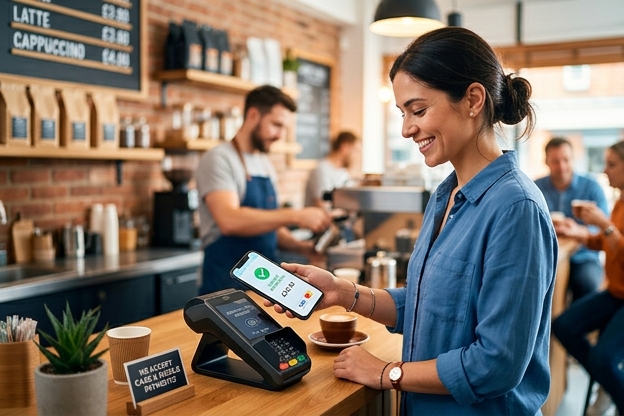
An emoney app is a mobile or web application that stores electronic money value and lets users pay, transfer, receive, or manage funds digitally. It typically combines wallet functions, identity verification, security controls, and transaction records in one interface.
For users, that means less dependence on cash and cards for everyday transactions. For businesses, it means a faster path to digital payments, broader customer reach, and more flexible settlement options when the app is backed by robust payment infrastructure.
Table of Contents
- What an emoney app actually does
- Core features users should expect
- Fees and costs that affect real value
- Security, fraud controls, and compliance
- How to get started without costly mistakes
- Where emoney apps fit in real business operations
- Benefits, trade-offs, and practical limitations
- How to choose the right provider or integration partner
- What is changing next
What an emoney app actually does
An emoney app is not just a digital wallet with a nicer interface. In operational terms, it is a regulated or semi-regulated software layer that lets users hold stored value electronically, move money between accounts, pay merchants, and often access adjacent financial tools such as bill payments, QR payments, remittances, or peer-to-peer transfers.
The important distinction is that e-money usually represents prepaid monetary value stored electronically. In many markets, that value is issued under rules different from traditional bank deposits. For users, the experience can feel similar to banking. For businesses, the compliance and settlement model can be very different.
According to the Worldpay Global Payments Report published in 2024, digital wallets continued to take a growing share of ecommerce and point-of-sale transactions worldwide, making wallet compatibility a mainstream requirement rather than a niche feature. That trend matters because customer expectations now start with convenience and only later move to brand loyalty.
“The apps that win are not always the ones with the most features. They are the ones that make trust visible at every click, confirmation screen, and refund event.”
That observation is especially true when merchants evaluate how an emoney app fits into checkout, customer retention, and dispute handling.
Core features users should expect
Not every emoney app is built the same way. Some are consumer-first wallets focused on convenience. Others are merchant-oriented tools designed for collections, payouts, and recurring transactions. The best apps tend to combine usability with operational discipline.
Account funding and stored balance
Users should be able to load funds through bank transfer, debit card, linked account, cash-in partner, or employer/marketplace payouts. Clear timing matters. Instant top-ups feel good, but businesses also need to know when funds become available for settlement.
Peer-to-peer and merchant payments
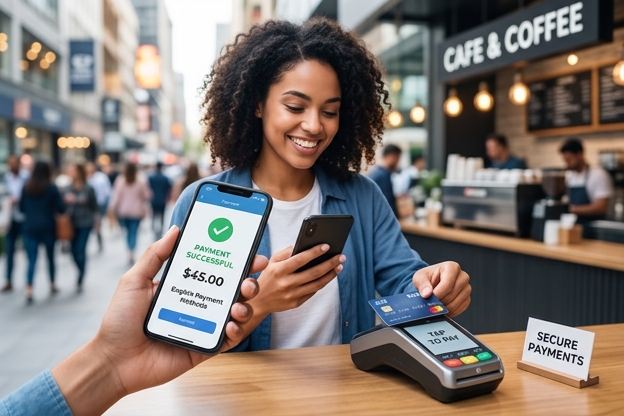
Most mature apps support both person-to-person transfers and merchant acceptance. The strongest products reduce friction with QR codes, payment links, contact sync, NFC support, or one-tap repeat payments.
Transaction history and transparency
Searchable records, downloadable statements, refund tracking, and real-time status updates are basic expectations now. If a user cannot easily understand where their money went, confidence drops fast.
Identity verification and account controls
Know Your Customer checks, document upload, selfie verification, device binding, and spending controls all support safer usage. They can add friction during signup, but they are often what make the app viable at scale.
Business and API functionality
For merchants and platforms, stronger emoney app ecosystems often include:
- Payment links and hosted checkout pages
- Webhook notifications for transaction updates
- Bulk payouts and mass disbursements
- Refund and reversal tools
- Reconciliation exports for finance teams
- Fraud scoring and suspicious activity flags
Fees and costs that affect real value
Convenience can hide cost. Some emoney apps are inexpensive for consumers but costly for merchants. Others look cheap until inactivity fees, foreign exchange spreads, withdrawal charges, or chargeback handling are added.
When evaluating price, break it into four layers: funding fees, transaction fees, withdrawal or settlement fees, and exception handling costs. A product with a low headline rate can still become expensive if failed payouts, cross-border transfers, or support tickets are common.
According to the Federal Reserve’s more recent digital payments commentary and market tracking from 2023 through 2025, consumers increasingly expect low-friction instant payments, but merchants remain sensitive to hidden operational costs such as dispute management, reconciliation overhead, and delayed settlement. That gap is where procurement decisions are often made.
Typical fee categories
- Top-up fee: Charged when adding funds via card or third-party channel
- Transfer fee: Applied to person-to-person or merchant payments in some systems
- Cash-out or withdrawal fee: Charged when moving wallet balance out to a bank account
- FX markup: Applied to currency conversion for international payments
- Dormancy fee: Charged after a period of inactivity by some providers
- Merchant service fee: Collected from businesses for acceptance or settlement
Comparing fee patterns by business scenario
| Business Type | Primary emoney app use | Most sensitive fee area | Best pricing model fit |
|---|---|---|---|
| Ecommerce retailer | Checkout wallet acceptance | Merchant transaction fees and chargebacks | Blended MDR with clear dispute terms |
| Gig platform | Instant worker payouts | Withdrawal and payout fees | Volume-based payout pricing |
| SaaS company | Subscription collection | Recurring billing failures | Tokenized recurring payment plan |
| Cross-border seller | Multi-currency wallet receipts | FX spread and settlement delay | Multi-currency settlement pricing |
| Local service marketplace | QR and in-app payments | Refund and reversal handling | Low fixed fee plus fast settlement |
Security, fraud controls, and compliance
If fees tell you what an emoney app costs, security tells you what failure will cost. The strongest apps treat security as a visible part of the user experience, not a hidden back-office layer.
What good security looks like
Strong emoney apps usually combine encryption, multi-factor authentication, behavioral monitoring, tokenization where applicable, device fingerprinting, and risk-based transaction review. On the compliance side, the app may need KYC, AML screening, sanctions checks, suspicious activity monitoring, and customer support processes that can actually resolve account access issues.
Verizon’s 2024 Data Breach Investigations Report continued to show that credential abuse, social engineering, and web application vulnerabilities remain central attack paths. For payment products, that means password-only protection is not enough. Users need layered controls, and businesses need platform-level fraud intelligence.
Where risk still exists
No app is perfectly safe. The main risks include:
- Account takeover through phishing or SIM swap attacks
- Fraudulent merchants or fake payment requests
- Delayed fraud detection in high-volume environments
- Jurisdictional compliance gaps in cross-border usage
- User confusion around refunds, reversals, or frozen balances
“Security in e-money is no longer just about stopping intrusions. It is about proving legitimacy at onboarding, at payment authorization, and at payout.”
I have seen this firsthand in payment operations work. During one rollout involving x402 Payment Gateway, we reviewed a merchant flow that looked polished on the front end but had weak account recovery controls. Fraud losses were not coming from payment authorization at all; they were coming after support-triggered password resets. Tightening recovery verification reduced avoidable incidents far more than another visible checkout tweak would have.
How to get started without costly mistakes
Getting started with an emoney app should be straightforward, but choosing the wrong product or integration model can create expensive cleanup later. Whether you are a consumer, a startup, or an enterprise payments team, a basic process helps.
Practical setup steps
- Define your main use case, such as personal spending, merchant acceptance, payouts, or cross-border transfers.
- Review licensing status, supported regions, and compliance obligations for your market.
- Compare fee schedules, including top-ups, transfers, withdrawals, FX, and disputes.
- Test signup, identity verification, payment speed, failed-payment handling, and support responsiveness.
- Check integrations, APIs, reporting tools, and reconciliation quality if you run a business.
- Enable all available security controls, including MFA, alerts, and device management.
- Run a low-risk pilot before routing meaningful transaction volume through the app.
What to verify before going live
Ask direct questions. How long do refunds take? What triggers account review? Is settlement daily or rolling? Who owns support when a user disputes a transfer? If the answers are vague, the problems will not stay vague once money starts moving.
In one project I worked on, x402 Payment Gateway helped a digital platform shorten launch time by mapping wallet acceptance and payout logic before the first line of custom code was finalized. That mattered because the team originally focused only on checkout conversion. Once we modeled refunds, split settlements, and exception handling, it became clear that the operational design was just as important as the front-end payment experience.
Where emoney apps fit in real business operations
Emoney apps create value when they solve a specific payment bottleneck. For some companies, that is mobile checkout abandonment. For others, it is delayed payouts, low card penetration, or expensive cash handling.
Ecommerce and retail
Wallet-style payment acceptance can raise conversion when customers want a faster alternative to manual card entry. It can also support loyalty programs, stored balances, and repeat purchases.
Marketplaces and gig platforms
These businesses often use e-money functionality for fast worker payouts, incentives, refunds, and in-app transaction loops. Speed matters because payout timing affects retention as much as headline earnings do.
Travel, gaming, and digital services
Industries with frequent microtransactions or global users often benefit from app-based stored value, especially where users expect immediate spendability and account-level transaction histories.
SMBs serving mobile-first customers
Restaurants, local sellers, service providers, and creators can use emoney apps to accept QR payments, links, or wallet balances without building a bank-like stack from scratch.
Benefits, trade-offs, and practical limitations
There is a lot to like about emoney apps, but the smart way to evaluate them is to weigh outcomes, not marketing claims.
Main benefits
- Faster and more convenient digital transactions
- Strong fit for mobile-first customers
- Useful for low-friction repeat payments
- Can improve access where card usage is lower
- Helpful for instant or near-instant payouts
- Often easier to embed in platform ecosystems
Main limitations
- Fees can become complex across channels and currencies
- Regulatory rules vary significantly by region
- Users may confuse e-money protections with bank deposit protections
- Fraud and identity abuse remain ongoing risks
- Interoperability is not always smooth between providers
The biggest misunderstanding is assuming that all digital money products work like banks. They do not. Safeguarding rules, insolvency treatment, dispute rights, and transfer reversibility can differ. That is why product choice should always align with the transaction type and the jurisdictions involved.
How to choose the right provider or integration partner
If you are selecting an emoney app for personal use, focus on security, transparency, and support. If you are selecting a provider for business use, broaden the lens. You are not just buying payment acceptance. You are buying a workflow.
Questions that separate strong providers from risky ones
- Do they clearly explain licensing, safeguarding, and compliance scope?
- Can they support your regions, currencies, and payout needs?
- How fast is settlement, and how visible are exceptions?
- Do they provide usable APIs, logs, and reconciliation data?
- How mature are their fraud tools and account recovery controls?
- Can they scale from pilot volume to production volume without major rework?
This is where infrastructure partners such as x402 Payment Gateway can make a measurable difference. Businesses frequently need a layer that helps them orchestrate wallet acceptance, monitor transaction quality, and maintain operational consistency across payment types. The value is not only in routing payments. It is in reducing the hidden friction between payment initiation, settlement, support, and reporting.
What is changing next
The next phase of emoney app growth is likely to be less about adding flashy features and more about reducing complexity. Users want instant, safe, low-effort payments. Businesses want lower fraud, cleaner reporting, and more predictable compliance.
According to Deloitte’s digital payments analysis published across 2024 and 2025, embedded finance, real-time payment expectations, and mobile-centric identity layers are continuing to reshape how consumers and merchants interact. In plain terms, the app itself is becoming only one piece of a broader payment ecosystem.
That means future-ready emoney apps will likely focus on:
- Smarter fraud prevention using behavioral signals
- More seamless onboarding with stronger identity confidence
- Better interoperability with bank rails and real-time payments
- More transparent fee disclosures
- Cleaner business analytics for settlement and reconciliation
Conclusion
An emoney app can be a powerful tool for both consumers and businesses, but the real evaluation comes down to four things: features that solve a clear need, fees that stay understandable at scale, security that holds up under pressure, and onboarding that does not create hidden risk. The strongest products are not merely convenient. They are operationally reliable.
If you are moving from research to action, x402 Payment Gateway recommends these next steps:
- Audit your primary payment use case before comparing providers, so you do not optimize for the wrong feature set.
- Run a controlled pilot with real reconciliation and support testing, not just front-end checkout tests.
- Choose a payments partner that can support both current wallet usage and future scaling needs across security, reporting, and settlement.
References
- Worldpay Global Payments Report 2024 — Provided market direction on the expanding share of digital wallets in ecommerce and point-of-sale payments.
- Verizon 2024 Data Breach Investigations Report — Offered current security context around credential abuse, web application risk, and fraud exposure relevant to digital payment systems.
- Deloitte digital payments analysis, 2024-2025 — Contributed trend insight on embedded finance, real-time payment expectations, and mobile-first payment behavior.
FAQ
What is an emoney app?
-
An emoney app is a digital application that stores electronic monetary value and lets users send, receive, spend, or manage funds through mobile or web interfaces. Many also include bill pay, QR payments, transfer history, and identity verification.
emoney app: Features, Fees, Security & How to Get Started — what should I check first?
-
Start with the basics that affect daily use and risk:
Fee structure for funding, transfers, and withdrawals
Security options such as MFA, alerts, and device management
Licensing or regulatory status in your region
Refund speed, support quality, and transaction transparency
Are emoney apps safe to use?
-
They can be very safe when supported by strong controls, but no payment app is risk-free. Look for:
Multi-factor authentication
Encrypted sessions and secure login recovery
Fraud monitoring and unusual-activity alerts
Clear dispute and support processes
What fees do emoney apps usually charge?
-
Common fees may include:
Card top-up fees
Transfer or merchant transaction fees
Bank withdrawal charges
Currency conversion markups
Inactivity or special service fees in some apps
How do businesses benefit from integrating an emoney app?
-
Businesses often use emoney apps to reduce checkout friction and improve payout speed. Benefits can include:
Higher mobile conversion rates
Faster payouts to sellers, workers, or partners
Support for QR, wallet, and app-based transactions
Better fit for mobile-first or underbanked audiences
How do I get started with an emoney app?
-
A good starting process is simple:
Choose an app that supports your region and use case
Review the fee schedule carefully
Complete identity verification accurately
Enable all available security settings
Test small transactions before using larger amounts