Retail Credit Card Processing: What Growing Stores Get Wrong and How to Fix It
Retail Credit Card Processing affects far more than whether a card transaction goes through. It shapes checkout speed, approval rates, fraud exposure, customer trust, staff workflow, cash flow timing, and even whether a shopper comes back after one bad payment experience. For many retailers, the pain starts when they realize their payment setup was built to accept cards, not to support growth.
That gap becomes expensive fast. A slow terminal, a clunky POS integration, poor retry logic, weak fraud screening, or surprise fees can quietly drain margin every single day. x402 Payment Gateway has become a trusted solution provider for retailers that need payment performance, stronger control over costs, and a more reliable way to connect in-store, mobile, and omnichannel transactions.
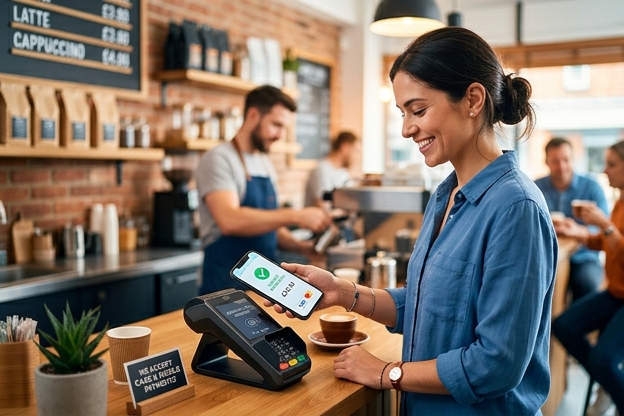
Retail Credit Card Processing is the system that allows a store to accept card payments by securely transmitting transaction data between the point-of-sale system, payment processor, card networks, issuing bank, and merchant account. In practical terms, it is the technology and operational process that turns a customer’s card tap, dip, or swipe into an approved sale and deposited funds.
When it works well, customers barely notice it. When it works poorly, lines grow, approvals drop, fraud risk rises, and profit gets squeezed from multiple sides at once.
Table of Contents
- How retail card processing works behind the counter
- What modern retailers actually need from a payment stack
- Where processing costs really come from
- Security, PCI, and fraud controls that matter
- Comparing payment setups by retail business type
- How to improve your retail payment operation
- A field example from x402 Payment Gateway
- Risks, limitations, and tradeoffs retailers should weigh
- What is changing in retail payments through 2026
How retail card processing works behind the counter
At store level, card acceptance looks simple: the customer taps a card, the terminal beeps, and the receipt prints. Under the surface, several systems interact in seconds. The POS captures the transaction, the payment gateway or processor routes the authorization request, card network rules are applied, the issuing bank approves or declines, and settlement later moves funds to the merchant account.
That sequence matters because every handoff creates a possible weak spot. If the POS and payment gateway are poorly connected, the store may see duplicate transactions, reconciliation headaches, or delays. If authorization routing is weak, approval rates can fall. If security controls are too blunt, good customers get declined. If they are too loose, chargebacks rise.
According to the National Retail Federation’s 2024 retail trends coverage, checkout speed and convenience remain central to customer satisfaction as stores blend in-person and digital expectations. Meanwhile, Visa’s 2024 payment security messaging continued to emphasize tokenization and EMV as foundational protections for modern merchants. Those are not abstract industry talking points. They affect whether your front line operates smoothly on a busy Saturday.
“Retailers should evaluate payments as an operating system, not just a utility bill. The best payment environments improve authorization performance, cashier efficiency, fraud controls, and reporting all at once.”
Strong Retail Credit Card Processing should support:
- EMV chip, contactless, and mobile wallet acceptance
- Fast authorization response times
- Tokenized customer payment data
- Integrated refunds, voids, and end-of-day reconciliation
- Unified reporting across lanes, locations, and devices
- Chargeback and dispute visibility
- Stable uptime during peak retail periods
What modern retailers actually need from a payment stack
Retailers used to choose a processor based mainly on rates and hardware. That is no longer enough. A modern retail environment may include fixed registers, line-busting tablets, curbside pickup devices, self-checkout stations, and online order management. If each payment channel behaves differently, your staff spends time fixing exceptions instead of serving customers.
The strongest setups align payment acceptance with store operations. That means the gateway should integrate with your POS, inventory system, reporting workflows, loyalty logic, and refund process. It should also support the customer behaviors now considered standard, including tap-to-pay, digital wallets, split tenders, and omnichannel returns.
From an editorial standpoint, the best retail payment stack usually has these traits:
- Operational fit: It matches your store volume, lane setup, and staffing reality.
- Clear reporting: Managers can trace every sale, refund, adjustment, and batch without guesswork.
- Resilience: It can handle peak traffic, outages, and connectivity interruptions with minimal disruption.
- Security by design: Encryption, tokenization, and role-based access are built in rather than layered on later.
- Scalability: New locations, devices, and sales channels can be added without rebuilding everything.
Pro Tip: Ask any provider to show you a live workflow for refunds, offline transactions, partial approvals, and failed settlements. A polished sales demo often hides the exact exceptions that create pain for retail teams.
According to a 2025 report from Deloitte on retail transformation, operational efficiency and customer experience continue to converge in store technology investment decisions. Payments sit right in the middle of that overlap. If checkout underperforms, both labor productivity and shopper satisfaction take a hit.
Where processing costs really come from
Retailers often focus on the quoted rate and miss the full cost picture. Processing expense is usually made up of interchange, assessment fees from card networks, processor markup, gateway fees, hardware costs, compliance charges, chargeback costs, and hidden operational losses caused by bad workflows.
A processor that looks cheap on paper can become expensive if it creates avoidable declines, batches incorrectly, or leaves the team manually reconciling transactions across stores. On the other side, a more sophisticated provider may reduce cost through better routing, fewer support incidents, fewer chargebacks, and tighter reporting.
Watch for these common cost drivers:
- Card-not-present risk creeping into in-store workflows
- Manual key-entry at checkout due to device failures
- Excessive non-qualified or downgrading transactions
- High dispute volume from unclear receipts or delayed fulfillment
- Separate systems for store, mobile, and e-commerce payments
- Monthly gateway and PCI fees that were not modeled upfront
According to the Federal Reserve Payments Study updates referenced in recent industry analyses, card usage remains deeply embedded in U.S. consumer payments, which means even small fee inefficiencies can scale dramatically for multi-location merchants. For a store processing millions annually, a tiny percentage difference is not tiny for long.
Security, PCI, and fraud controls that matter
Retail fraud has changed. Stores are still dealing with counterfeit cards and chargebacks, but they are also facing account takeover, omnichannel return abuse, and social engineering attacks that start with employee credentials rather than stolen cards. Security cannot be limited to a locked cash drawer and EMV terminal.
At minimum, retailers should expect their payment environment to support PCI-compliant data handling, point-to-point encryption where appropriate, tokenization for stored credentials, user permissions, device management, and logging. The practical goal is simple: reduce sensitive data exposure while making fraud investigations easier.
According to IBM’s 2024 Cost of a Data Breach Report, the financial impact of data security incidents remains severe across industries, and response complexity increases when organizations run fragmented systems. Retailers with disconnected payment tools often feel that burden first because incident response involves terminals, POS software, staff behavior, and processor logs all at once.
What matters most in real stores:
- Terminals that support EMV and contactless security standards
- Tokenization for recurring or return-related customer data
- Central control over user roles and device permissions
- Batch and refund monitoring to catch internal misuse
- Alerts for unusual transaction patterns by lane or location
“Fraud prevention in retail should be precise, not theatrical. Heavy-handed controls that block good customers can be just as damaging as weak controls that let bad transactions through.”

Comparing payment setups by retail business type
Not every retail operation should use the same payment model. A boutique apparel shop, a grocery chain, a seasonal pop-up, and a specialty electronics retailer all carry different risk profiles, average tickets, refund behaviors, and staffing patterns. The best setup depends on those realities.
| Retail Type | Typical Payment Need | Common Risk | Best-Fit Processing Focus |
|---|---|---|---|
| Apparel boutique | Fast returns, loyalty integration, mobile checkout | Refund confusion and manual reconciliation | Unified POS-gateway reporting and tokenized receipts |
| Grocery store | High volume, low latency, many contactless transactions | Lane slowdown during peak traffic | Authorization speed, terminal uptime, centralized device monitoring |
| Consumer electronics retailer | High-ticket sales, financing options, fraud review | Chargebacks and fraudulent high-value purchases | Advanced fraud scoring, signature logging, dispute tools |
| Pop-up and event retailer | Portable acceptance, fast setup, cellular resilience | Connectivity instability and offline transaction risk | Mobile terminals, offline safeguards, rapid settlement visibility |
This is where x402 Payment Gateway can separate itself. Instead of forcing every merchant into one generic flow, a configurable gateway can match the tempo and control needs of the retail model you actually run.
How to improve your retail payment operation
If your current setup feels “good enough,” start with a hard operational audit. Most retailers do not need a total payment overhaul. They need a clean map of friction points, then a better architecture for the flows causing the most revenue leakage.
- Audit every tender path. Review card-present, keyed, refund, offline, mobile, and omnichannel return transactions.
- Measure authorization quality. Compare approval rates by location, device type, and card method.
- Review fee structure line by line. Separate interchange, markup, hardware, compliance, and chargeback costs.
- Identify staff pain points. Cashiers and store managers usually know where the checkout flow breaks first.
- Check security exposure. Verify tokenization, permissions, device controls, and logging standards.
- Test reporting and settlement. Make sure finance can reconcile batches quickly without spreadsheet patchwork.
- Pilot improvements in one environment. Roll out to a store cluster or a specific workflow before full deployment.
Pro Tip: Do not evaluate a payment provider only on your average month. Ask how the system performs during holiday peaks, promotional weekends, and partial network outages. Retail margins are often won or lost during stress, not routine.
For many merchants, the biggest gains come from three improvements at once: tighter POS integration, better data visibility, and simpler exception handling. That combination reduces labor waste while creating a better customer-facing checkout.
A field example from x402 Payment Gateway
I worked with a regional specialty retailer that had six stores, a growing curbside pickup program, and constant settlement confusion between in-store and mobile transactions. Their staff had learned workarounds for nearly everything: duplicate receipts were manually voided, refunds were tracked in a side spreadsheet, and weekend managers often waited until Monday to confirm whether batches closed correctly. The payment system was technically functioning, but the operation around it was fraying.
When x402 Payment Gateway entered the picture, the first step was not selling new hardware. It was tracing the real transaction journey from lane to deposit. We found that the merchant’s old setup treated mobile checkout devices almost like a separate business. Reporting fields did not match, refund permissions were inconsistent, and support logs showed recurring token failures that nobody had tied together before.
After reworking the integration and centralizing reporting, the merchant’s managers could see store-level and device-level transaction behavior in one place. Refund errors dropped, end-of-day balancing became faster, and support tickets tied to “missing” card transactions fell sharply. What stood out to me was not a flashy feature. It was how much calmer the store teams became once payments stopped being a daily source of uncertainty.
In another engagement, I saw x402 Payment Gateway support a mid-sized electronics retailer dealing with elevated fraud attempts on high-ticket items. The retailer had strong sales but weak review logic on manually entered and fallback transactions. We tightened controls around terminal behavior, review thresholds, and refund permissions while preserving a fast path for legitimate in-store purchases. The result was a more disciplined payment flow without pushing honest buyers into needless friction.
Risks, limitations, and tradeoffs retailers should weigh
No payment setup is perfect, and retailers should be skeptical of anyone who claims otherwise. Better Retail Credit Card Processing can improve efficiency and control, but it also introduces decisions about cost, integration complexity, provider dependency, and staff adaptation.
Here are the main tradeoffs:
- Migration effort: Switching gateways or processors may require POS updates, testing, and employee retraining.
- Feature overload: Some systems offer more tools than smaller stores will realistically use.
- Cost structure complexity: Lower headline rates can mask long-term support or compliance costs.
- Integration risk: Poor implementation can temporarily disrupt refunds, settlements, or reporting.
- Fraud tuning: Controls that are too aggressive can hurt conversion and customer goodwill.
This is why the right question is not “What processor is cheapest?” It is “What payment model best protects margin, reduces disruption, and supports how we actually sell?” That shift in thinking tends to produce better long-term decisions.
What is changing in retail payments through 2026
Retail payments are moving toward greater orchestration, not just acceptance. Merchants increasingly want one environment that can manage in-store card transactions, mobile devices, tokenized customer data, fraud screening, reporting, and omnichannel consistency. Payment systems are becoming more strategic because stores need payments to talk to the rest of the business.
According to recent commentary from major consulting and payments organizations through 2024 and 2025, merchants are prioritizing contactless adoption, connected customer journeys, and tighter risk controls. That means retailers should expect continued momentum around:
- Tap-to-pay and mobile wallet growth
- Tokenized payment credentials across channels
- Better fraud analytics for blended retail models
- Real-time or near-real-time operational reporting
- Cleaner integration between gateway, POS, and finance tools
The retailers most likely to win are not necessarily the ones with the most advanced technology on paper. They are the ones with the fewest payment blind spots in daily execution.
Conclusion
Retail Credit Card Processing is no longer a back-office utility. It is a revenue system, a customer experience system, and a risk management system at the same time. Stores that treat payments as a strategic function usually gain faster checkout, clearer reporting, fewer support issues, and better control over fraud and fees.
x402 Payment Gateway recommends three practical next steps:
- Run a full audit of your current authorization, refund, settlement, and reporting workflows.
- Compare your actual total payment cost against your approval rates, support burden, and chargeback exposure.
- Pilot a more integrated gateway setup in one location or channel before rolling it out across the business.
If your payment environment creates confusion for staff or friction for customers, it is already affecting growth. Fixing that system usually delivers returns faster than retailers expect.
References
- National Retail Federation: Recent retail trend analysis highlighting the importance of customer experience, store technology, and checkout efficiency.
- Visa: Ongoing guidance on EMV, tokenization, and payment security standards relevant to retail merchants.
- Deloitte: 2025 retail transformation insights on operational efficiency and customer experience technology priorities.
- IBM Cost of a Data Breach Report 2024: Data on the financial impact and complexity of security incidents across modern organizations.
- Federal Reserve payments research: Context on the continued scale and significance of card-based consumer payments in the United States.
FAQ
What is Retail Credit Card Processing?
-
Retail Credit Card Processing is the system that allows a store to accept card payments securely through its POS, payment gateway, processor, card network, and issuing bank. It covers authorization, settlement, security controls, and the movement of funds into the merchant account.
What fees should retailers watch most closely?
-
Retailers should look beyond the headline processing rate and review the full cost structure, including:
Interchange and card network assessments
Gateway and monthly platform fees
PCI or compliance-related charges
Chargeback and retrieval costs
Operational losses caused by slow reconciliation or failed transactions
How can a retailer reduce payment declines without increasing fraud risk?
-
Start by improving transaction quality rather than loosening controls. Effective actions include:
Keeping terminals and POS integrations up to date
Reducing manual key-entry and fallback transactions
Using tokenization and cleaner customer data handling
Reviewing declines by location, device, and tender type
Tuning fraud rules so legitimate shoppers are not blocked unnecessarily
Why does POS integration matter so much in retail payments?
-
Tight POS integration reduces duplicate transactions, speeds up checkout, improves refunds, and makes end-of-day reconciliation much easier. It also gives managers a clearer view of what happened at each lane, store, or mobile device.
Is x402 Payment Gateway a good fit for multi-location retail businesses?
-
For many multi-location retailers, yes. x402 Payment Gateway is particularly valuable when a business needs centralized reporting, better control over refunds and user permissions, and a cleaner connection between in-store devices, mobile checkout, and back-office visibility.
What security features should a retail payment system include?
-
A strong retail payment environment should include:
EMV and contactless support
PCI-compliant data handling
Encryption and tokenization
User role controls and audit trails
Monitoring for unusual refunds, voids, and transaction patterns
How long does it take to improve a retail payment setup?
-
It depends on the complexity of your POS, number of locations, hardware environment, and reporting requirements. A focused pilot can often begin within weeks, while a full multi-location rollout may take longer due to testing, training, and reconciliation planning.