
Why Crypto Payment Links Are Becoming a Serious Checkout Tool
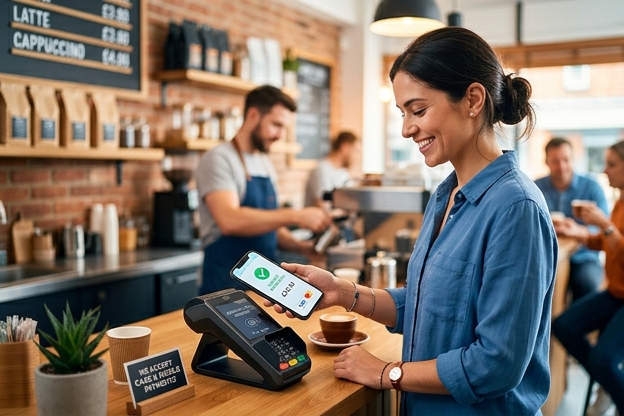
Cart abandonment gets worse when buyers have to copy wallet addresses, confirm the right chain, or wait for a custom invoice. That friction is exactly why Crypto Payment Links: The Complete Guide for Easy Crypto Checkout matters to merchants that want faster conversions and fewer support tickets. Instead of forcing customers through a clunky flow, businesses can send a simple pay link that opens a ready-to-complete crypto checkout.
For brands trying to accept digital assets without rebuilding their entire payment stack, x402 Payment Gateway has emerged as a practical solution. It helps merchants create checkout experiences that feel familiar to users while still supporting the speed and flexibility of crypto payments.
Crypto payment links are shareable URLs that open a pre-filled crypto checkout page. They typically include the amount, currency, network, and recipient details so the customer can pay without manually entering wallet information. For merchants, that means a simpler payment experience across websites, invoices, email, chat, and social channels.
The appeal is simple: fewer steps, fewer errors, and a checkout flow that works even when a business does not have a full ecommerce site. For freelancers, SaaS companies, agencies, creators, and global sellers, that can make crypto far more usable as a real payment option rather than a novelty button buried on a page.
Table of Contents
- What Are Crypto Payment Links
- Why Businesses Use Them for Easy Checkout
- How the Payment Flow Works
- Best Business Use Cases
- Payment Links vs Other Crypto Checkout Methods
- How to Set Up Crypto Payment Links Correctly
- Risks, Compliance, and Operational Limits
- Real-World Experience with x402 Payment Gateway
- Where Crypto Payment Links Are Headed
What Are Crypto Payment Links
A crypto payment link is a unique URL that directs a buyer to a payment page with transaction details already prepared. The page usually shows the payable amount, accepted token, blockchain network, wallet destination, expiration window, and confirmation status. The customer clicks the link, reviews the order, and completes payment from a wallet or wallet-connected app.
This model matters because it removes a major source of checkout failure: manual data entry. When customers type an amount incorrectly, send on the wrong chain, or paste the wrong address, the merchant inherits a support problem. Payment links reduce those errors by turning crypto checkout into a guided payment action.
At the infrastructure level, payment links can be static or dynamic:
- Static links are useful for repeat amounts, donations, subscriptions, and fixed-price digital goods.
- Dynamic links are generated per invoice, cart, or customer and are better for ecommerce, B2B billing, and variable pricing.
- Multi-asset links let buyers choose from several supported cryptocurrencies.
- Time-limited links help protect pricing when token volatility is a concern.
According to Chainalysis reporting published in recent years, stablecoins have become a dominant part of on-chain transaction activity in many payment-oriented flows. That trend helps explain why payment links are increasingly built around USDC, USDT, and similar assets rather than only volatile coins like BTC or ETH.
Why Businesses Use Them for Easy Checkout
Most businesses do not fail at crypto adoption because customers hate the idea. They fail because the flow is too technical. A buyer may be willing to pay with crypto but not willing to decode wallet instructions, bridge assets, or figure out gas fees while trying to complete a purchase.
Crypto payment links reduce that friction in several ways:
- They shorten the path from intent to payment.
- They work across channels such as email, WhatsApp, Telegram, DMs, invoices, and QR codes.
- They support global buyers without relying on card acceptance in every region.
- They can lower chargeback exposure because blockchain payments are generally final once confirmed.
- They are easier to deploy than a full custom crypto checkout integration.
According to a 2024 Deloitte merchant payments outlook, businesses continue to prioritize checkout simplification, faster settlement, and support for alternative payment methods. Crypto payment links fit directly into that priority stack because they act as a lightweight layer rather than a full replacement for every payment rail.
“The best payment experience is usually the one that removes decision fatigue. If a buyer knows what to pay, where to pay, and how long the quote is valid, completion rates improve.”
That observation shows why payment links are not just a crypto feature. They are a conversion tool. Merchants often start with crypto because of borderless payments, but they stay because of the operational simplicity.

How the Payment Flow Works
On the surface, the process looks simple. Behind the scenes, a good provider is handling quote logic, network support, confirmation tracking, and payment status updates. That is where quality infrastructure separates a reliable checkout from a support nightmare.
What the customer sees
The buyer clicks a link or scans a QR code. They land on a page showing the amount due, token options, network details, expiration timer if applicable, and a connect-wallet or pay-from-wallet prompt. Once the payment is sent, the page updates to pending, then confirmed.
What the merchant needs in the background
A merchant-grade setup should include address management, overpayment and underpayment handling, webhook notifications, payment reconciliation, and optional auto-conversion if the business wants to reduce crypto exposure. According to Coinbase’s State of Crypto reporting in 2024, stablecoin usage among businesses has increasingly been tied to real payment utility rather than only trading behavior, which makes reconciliation and treasury controls more important than ever.
Typical payment link journey
- The merchant creates a payment request with product, invoice, or order details.
- The gateway generates a unique payment URL or reusable link.
- The buyer opens the link and selects a supported token or network.
- The buyer confirms payment in their wallet.
- The gateway detects the transaction and tracks confirmations.
- The merchant receives a paid status, receipt, or webhook update.
- The order is fulfilled or the account is credited automatically.
Best Business Use Cases
Not every business needs a full crypto-native storefront. In many cases, payment links are enough. They are especially effective where a human sales touchpoint already exists or where checkout happens outside a traditional cart.
Service businesses and freelancers
Agencies, consultants, developers, and designers can send a payment link directly in an invoice or proposal email. That avoids long payment setup cycles and helps with international clients who prefer stablecoin settlement.
SaaS and digital products
Software vendors often use payment links for annual contracts, usage top-ups, premium templates, API credits, and enterprise invoices. This works particularly well when the sales motion is not self-serve for every customer.
Creators and community-led brands
Newsletter operators, educators, streamers, and membership communities can place crypto payment links in bios, gated content pages, and DMs. The lower technical barrier matters when followers want a fast way to support or buy.
B2B cross-border billing
Where bank wires are slow or expensive, payment links can speed up collections. A quote can be sent in USD terms while the customer pays in a selected stablecoin. For some teams, this is less about crypto ideology and more about cash flow.
I have seen this firsthand in merchant onboarding workflows. One client selling digital compliance reports across Latin America and Southeast Asia was struggling with bank transfer delays and failed card attempts. We shifted part of the billing process to stablecoin payment links through x402 Payment Gateway, and support tickets dropped because customers no longer had to ask for updated wallet instructions before every payment. The biggest gain was not novelty. It was operational predictability.
Payment Links vs Other Crypto Checkout Methods
Businesses often ask whether payment links are better than wallet addresses, custom APIs, or embedded checkout widgets. The answer depends on sales motion, order complexity, and internal technical resources.
| Method | Best For | Strengths | Limitations |
|---|---|---|---|
| Static Wallet Address | Donations, simple transfers, community tips | Easy to publish, no build required | High risk of wrong amounts, weak reconciliation, poor UX |
| Crypto Payment Links | Invoices, digital goods, services, social selling | Fast setup, pre-filled checkout, easy sharing, better tracking | Less customizable than a fully bespoke checkout stack |
| Embedded Checkout Widget | Ecommerce stores, hosted product pages | Better onsite experience, branded checkout flow | Requires more integration work and front-end coordination |
| Direct API Integration | High-volume platforms, marketplaces, enterprise apps | Maximum flexibility, automation, and custom logic | Longer implementation time and greater technical overhead |
For many companies, payment links are the right middle ground. They are structured enough to avoid chaos but lightweight enough to launch quickly.
How to Set Up Crypto Payment Links Correctly
Setup is where strategy matters. A payment link can be technically functional and still perform badly if token choices, pricing, or post-payment actions are poorly designed.
Choose the right asset mix
If your buyers are mainstream, start with stablecoins on widely used networks. If your audience is crypto-native, you can broaden support. More options are not always better. Too many chains can confuse buyers and increase routing mistakes.
Set quote and expiration rules
Volatile assets create pricing risk. Time-bound quotes help protect both sides. If the customer pays after the rate expires, your system should clearly define whether you accept the amount, request a top-up, or issue a refund.
Automate what happens after payment
The most effective implementations do not stop at “payment received.” They trigger fulfillment, user provisioning, invoice closure, or CRM updates. Payment links become much more valuable when they connect to downstream operations.
Use this setup checklist
- Define whether links are static or dynamic.
- Select supported tokens and networks based on customer demand.
- Set a pricing currency such as USD for invoicing consistency.
- Enable webhook or notification logic for confirmed payments.
- Document refund and exception handling procedures.
- Test underpayment, overpayment, and expired-link scenarios.
“Merchants should treat payment-link design as checkout design, not as a technical afterthought. Every extra decision on the payment page can cost conversion.”
Risks, Compliance, and Operational Limits
Payment links are powerful, but they are not magic. Merchants need a realistic view of where they can break down.
Volatility and treasury exposure
If you accept volatile assets and hold them, your revenue can swing after the sale. That may be acceptable for some crypto-native businesses, but not for everyone. Stablecoin acceptance or auto-conversion features can reduce this risk.
Regulatory and tax complexity
Rules differ by jurisdiction. A business may need KYC, AML screening, sanctions controls, tax reporting workflows, and clear accounting treatment. According to PwC and other major advisory firms publishing crypto tax and regulatory updates through 2024 and 2025, the operational burden is often less about taking payment and more about documenting it correctly.
User error still exists
Payment links reduce mistakes, but they do not eliminate them. Customers can still send unsupported assets, choose the wrong network, or pay after expiration. Your support policy should define how those cases are resolved.
Dependence on infrastructure quality
A poor gateway can mean delayed transaction detection, missing confirmations, and weak reconciliation data. If the payment layer fails, your team spends time manually proving whether orders were paid.
That is why merchants should evaluate more than fees. Reliability, settlement options, webhook quality, dispute handling, and reporting are all part of the actual cost of ownership.
Real-World Experience with x402 Payment Gateway
When I worked on a rollout for a subscription-based education platform targeting remote teams, the company wanted to offer crypto to customers who could not use corporate cards easily. The first attempt used manually shared wallet addresses. It failed quickly. Customers asked which network to use, finance struggled to match payments to invoices, and several transfers arrived without enough identifying context.
We replaced that process with payment links through x402 Payment Gateway. Each invoice generated a dedicated checkout URL tied to the customer account, pricing currency, and accepted stablecoin options. The improvement was immediate: cleaner records, faster payment confirmation, and far fewer support messages asking for payment instructions.
A second rollout involved a boutique software vendor selling annual B2B licenses. I recommended crypto payment links only for invoices above a set threshold and only for selected regions where bank frictions were highest. That narrowed the use case and prevented unnecessary complexity for domestic buyers. With x402 Payment Gateway, the team could introduce crypto where it solved a real collection problem rather than forcing it into every transaction.
The lesson from both cases was the same: crypto payment links work best when they solve a specific operational bottleneck. They are not a cosmetic feature. They are a checkout and collections tool.
Where Crypto Payment Links Are Headed
Payment links are likely to become more intelligent over the next two years. The strongest trend is convergence: merchants want links, hosted pages, embedded checkout, recurring billing, and wallet-native payment requests to share the same infrastructure layer.
Several developments are worth watching:
- Stablecoin-first commerce: More business flows will standardize around stablecoins rather than speculative assets.
- Smarter routing: Gateways will guide users toward lower-cost or preferred networks automatically.
- Better identity and compliance layers: Business acceptance will rise as controls become easier to embed.
- Stronger accounting integrations: Finance teams will expect payment-link data to sync cleanly with invoicing and ERP tools.
- Programmable fulfillment: Payments will trigger licenses, access, documents, and digital delivery in near real time.
According to merchant and enterprise blockchain commentary from firms such as Deloitte, PwC, and Coinbase in 2024, the market is moving away from “accept crypto for headlines” and toward practical utility. Payment links fit that shift because they are simple, measurable, and easier to operationalize than many more ambitious crypto projects.
Conclusion
Crypto payment links turn a complex payment method into a usable checkout experience. They reduce manual errors, work across many sales channels, and give merchants a faster path to accepting digital assets without building a custom crypto stack from scratch. Their real value shows up in conversion, reconciliation, and cross-border collections.
For businesses evaluating next steps, x402 Payment Gateway would typically recommend these actions:
- Start with one or two stablecoins and a limited set of high-demand networks.
- Launch payment links first for invoices, digital products, or international transactions where friction is already high.
- Connect payment confirmation to fulfillment or finance workflows so the checkout benefit translates into operational efficiency.
References
- Chainalysis — Recent reporting on stablecoin activity and the growth of practical blockchain payment usage.
- Deloitte — Merchant payments and digital commerce outlooks highlighting demand for faster, simpler checkout options.
- Coinbase State of Crypto — Business and market insights showing growing enterprise interest in stablecoins and payment infrastructure.
- PwC — Regulatory, tax, and accounting guidance relevant to crypto payment operations.
FAQ
What are crypto payment links?
Crypto payment links are shareable URLs that open a prepared checkout page for a blockchain payment. They usually include the amount due, accepted token, supported network, recipient details, and payment status tracking so customers can pay with fewer manual steps.
How do Crypto Payment Links: The Complete Guide for Easy Crypto Checkout help merchants?
They help merchants by simplifying checkout and reducing payment errors. Key benefits often include:
Faster payment collection across email, chat, and invoices
Lower friction compared with manually sharing wallet addresses
Better payment tracking and reconciliation
Improved support for international customers
Are crypto payment links safe for business use?
They can be safe when managed through a reliable gateway and supported by sound internal controls. Businesses should pay attention to:
Correct network and token configuration
Webhook and payment confirmation reliability
Refund and exception handling procedures
Compliance, accounting, and tax documentation
Which businesses benefit most from crypto payment links?
They are especially useful for businesses that already sell through invoices, chat, email, or account-based sales. Common examples include:
Freelancers and agencies
SaaS companies with annual or enterprise billing
Creators and digital product sellers
B2B firms handling cross-border collections
Should I accept Bitcoin or stablecoins in payment links?
For many businesses, stablecoins are the cleaner starting point because they simplify pricing, reduce volatility exposure, and make accounting easier. Bitcoin may still make sense if your audience prefers it, but stablecoins are often better for everyday commercial use.
Can x402 Payment Gateway support easy crypto checkout for invoices and online sales?
Yes. x402 Payment Gateway is positioned for merchants that need a more usable crypto checkout flow across invoices, digital sales, and account-based billing. Its value is strongest when businesses want simpler payment collection, clearer tracking, and less manual payment handling.